A campus safe ride program is a transportation service designed to provide free or subsidized rides to students, typically operating during evening and late-night hours to prevent drunk driving, assault, and other safety incidents. These programs have become standard at universities nationwide, with research showing they reduce alcohol-related driving incidents by up to 6% and significantly improve student perception of campus safety. The CDC reports that nearly one in four college students engage in binge drinking, making safe ride programs a critical component of institutional risk management and student welfare.
If you're on your student government, involved in campus safety, or serve on a university transportation committee, you need to understand how effective safe ride programs work, what they cost, and how to evaluate whether your campus has adequate coverage.
How Campus Safe Ride Programs Work
Campus safe ride programs operate with a simple premise: make it easier and free to get a safe ride than to drive intoxicated or walk alone late at night. Most programs use a mix of human dispatchers and mobile apps that allow students to request a vehicle directly from their phone or via a telephone hotline.
Vehicles typically operate between 7 p.m. and 3 a.m., with peak demand occurring after midnight on weekends. Routes vary by institution. Some universities run fixed routes similar to regular transit; others use on-demand pickup (dispatch sends a vehicle to wherever the student is on or near campus). The most effective programs combine both approaches, offering scheduled loops during peak hours and on-demand service during slower periods.
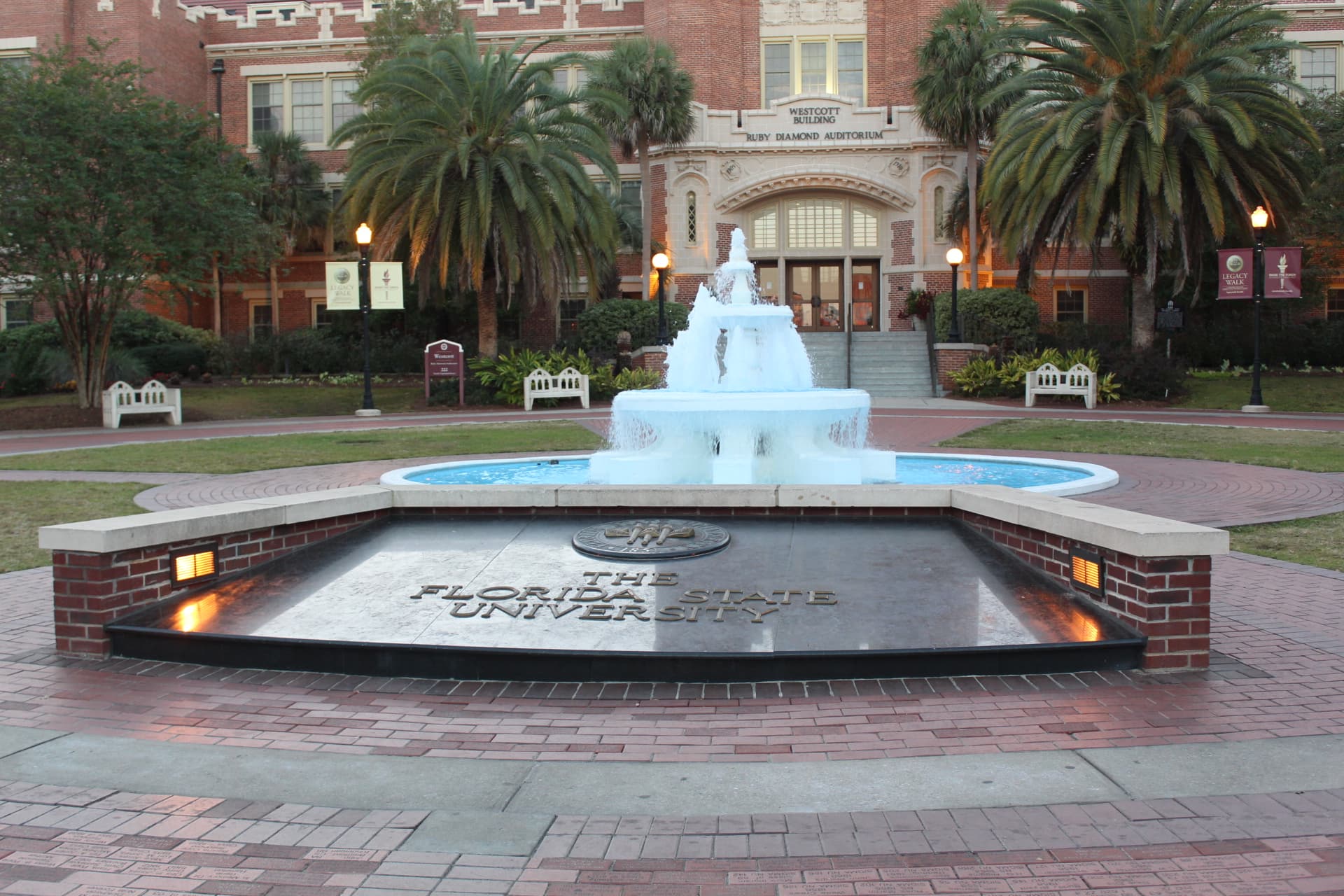
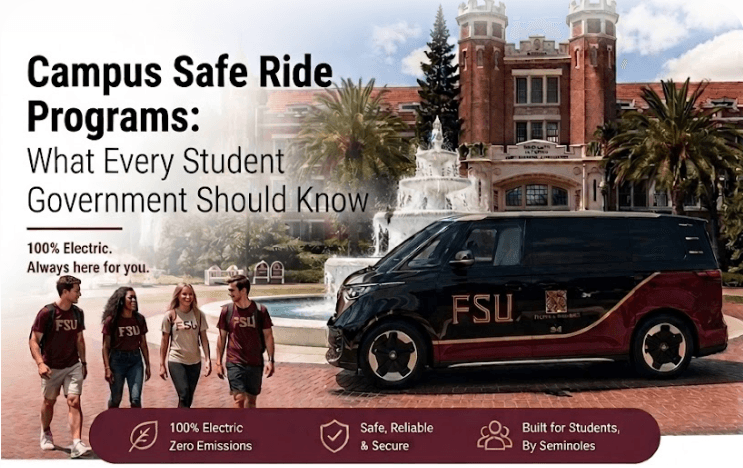
Funding comes from a combination of student fees (usually $10-25 per semester), institutional budgets, and in some cases, grants from traffic safety organizations. At Florida State University, the FSU Safe Ride program operates as a student-run enterprise partly funded through a student activity fee and supported by the university's commitment to reducing impaired driving incidents on and around campus.
Key Metrics That Matter for Safe Ride Programs
When evaluating whether your campus program is working, focus on these four metrics: ridership volume, response time, coverage hours, and utilization rate during peak risk periods.
Ridership volume tells you whether students actually use the service. A typical mid-sized university (15,000 students) should see 300-500 rides per night during fall and spring semesters. At Catawba College in Salisbury, NC, their CatawbaGO program logged 4,520 rides in fall 2025, demonstrating strong student adoption of the service.
Response time is critical for both safety and perception. If a student requests a ride and waits 30 minutes, they may abandon the service and find an alternative. Best-in-class programs achieve 5-10 minute average wait times. UNA Roar Ride in Florence, AL, operates at this level and has doubled ridership after implementing data-driven service adjustments that reduced wait times and expanded coverage to high-traffic areas.
Coverage hours matter more than you might think. A program that only runs until midnight misses the period when most impaired driving occurs. Programs should operate at minimum from 7 p.m. to 3 a.m., seven days a week.
The Cost and Operational Reality of Running a Safe Ride Program
Most universities dramatically underestimate the cost of running a safe ride program. A robust program requires dedicated vehicles, professional drivers, insurance, maintenance, a dispatch system, and staff management. The actual cost per ride typically ranges from $8 to $15, depending on local labor costs and fleet size.
Universities have three operational models to choose from:
| Operational Model | Typical Cost | Key Advantage | Main Challenge |
|---|---|---|---|
| In-house (hire staff, buy vehicles, manage all ops) | $200K-400K/year | Full control, builds institutional knowledge | High ongoing labor and capital costs, recruitment challenges |
| Hybrid (own vehicles, outsource drivers/dispatch) | $150K-250K/year | Lower labor burden, some institutional ownership | Still requires fleet management, maintenance oversight |
| Turnkey Operator (full outsourcing) | $120K-200K/year | Minimal internal staff, predictable costs, rapid launch | Less direct control, vendor dependency |
The turnkey model has emerged as the most practical for many universities because it eliminates the operational complexity of hiring drivers, managing vehicle maintenance, and handling insurance and compliance. With a single monthly fee covering vehicles, drivers, insurance, technology, and dispatch, universities can focus on student experience rather than transportation logistics.
Real-World Performance: What the Data Shows
Effective safe ride programs demonstrate consistent utilization and strong safety outcomes. In Oberlin, Ohio, a single vehicle operated as part of a campus safety initiative generated 28,264 passenger trips over a 12-month period, averaging nearly 77 rides per day. This level of utilization shows that when programs are well-designed and properly promoted, students will use them.
Geographic coverage matters significantly. Programs that expand service to include off-campus areas near popular student housing and neighborhoods see higher utilization. When UNA Roar Ride in Florence, AL, pivoted to data-driven route planning based on actual rider pickup and dropoff locations, ridership doubled to 8,448 riders per semester. This demonstrates that program design decisions directly impact adoption.
Response time correlates directly with student satisfaction. Cove Inn in Naples demonstrated that when average wait times drop to 5 minutes or below, riders increase rapidly. The property saw 749 riders in less than a month once the service launched with adequate vehicle coverage for demand periods.
Frequently Asked Questions
How much funding do we need to request from the university administration to start a campus safe ride program?
The amount depends entirely on your operational model and service scope. A modest program serving 10,000 students with on-demand service during 8 hours per evening, five nights per week, typically requires $120,000-180,000 annually. Request quotes from potential operators and include this figure in your proposal alongside the safety outcomes and institutional liability reduction that justify the investment.
What happens if we can't get student government approval for a fee increase to fund the program?
Most universities layer funding from multiple sources: student fees, institutional safety budgets, grant funding from traffic safety organizations, and sometimes sponsorship from local insurance companies or healthcare systems. Start with what you can secure from one source and expand the funding base over time. Many universities allocate 5-15% of their transportation or student life budgets toward safe ride programs without requiring new fees.
How do we actually measure whether the program is working to reduce drunk driving?
Measure three things: ridership volume (growing rides indicate growing usage), utilization during high-risk periods (midnight to 3 a.m. on Fridays and Saturdays), and qualitative feedback from campus police and residential life staff. You can also survey students on whether the program influenced their transportation choices. A program that reaches 500+ students per week and shows year-over-year growth is actively changing behavior.
Moving Forward with Campus Safe Ride Programs
Campus safe ride programs are no longer optional amenities at universities. They reduce institutional liability, save lives, and directly address the most dangerous moment in a college student's week: late night transportation after social events. Student government leaders who take ownership of this issue position themselves to make a tangible impact on campus safety culture. The operational complexity of running these programs has decreased significantly in recent years, and the case for implementation is both compelling and well-documented. Your next step is to survey your campus community about existing service gaps, gather cost estimates for different operational models, and begin building the case for why your university needs this program.