Electric campus transit refers to battery-powered vehicle systems that move students, staff, and visitors between campus locations, replacing or supplementing traditional diesel shuttles and personal vehicles. According to the Association for the Advancement of Sustainability in Higher Education (AASHE), transportation accounts for roughly 50% of most universities' carbon footprints, making it the single largest emissions source on campus. For universities committed to carbon-neutral operations by 2030 or 2050, switching to electric transit is not optional. It is foundational. The transition also addresses a practical reality: campus parking is expensive to build and maintain, students demand safe late-night transportation, and vehicle emissions create local air quality problems. Universities across the country are discovering that electric campus transit solves all three problems at once.
Why Universities Are Prioritizing Electric Transit
The financial case for electric campus transit has shifted dramatically. Universities face pressure from three directions: climate commitments to reduce emissions, students who expect safe and convenient transportation options, and rising operational costs for traditional shuttle fleets. A single diesel shuttle bus costs $300,000 to $400,000 upfront and burns through thousands in fuel annually. Electric vehicles cost less to operate, require minimal maintenance, and generate positive PR in admissions materials.
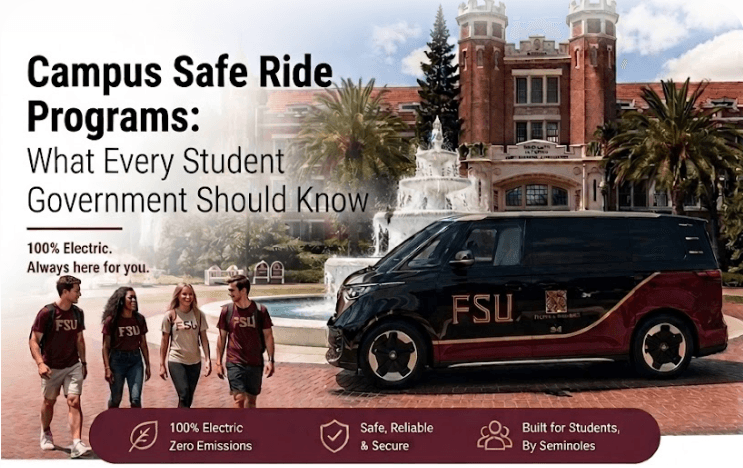
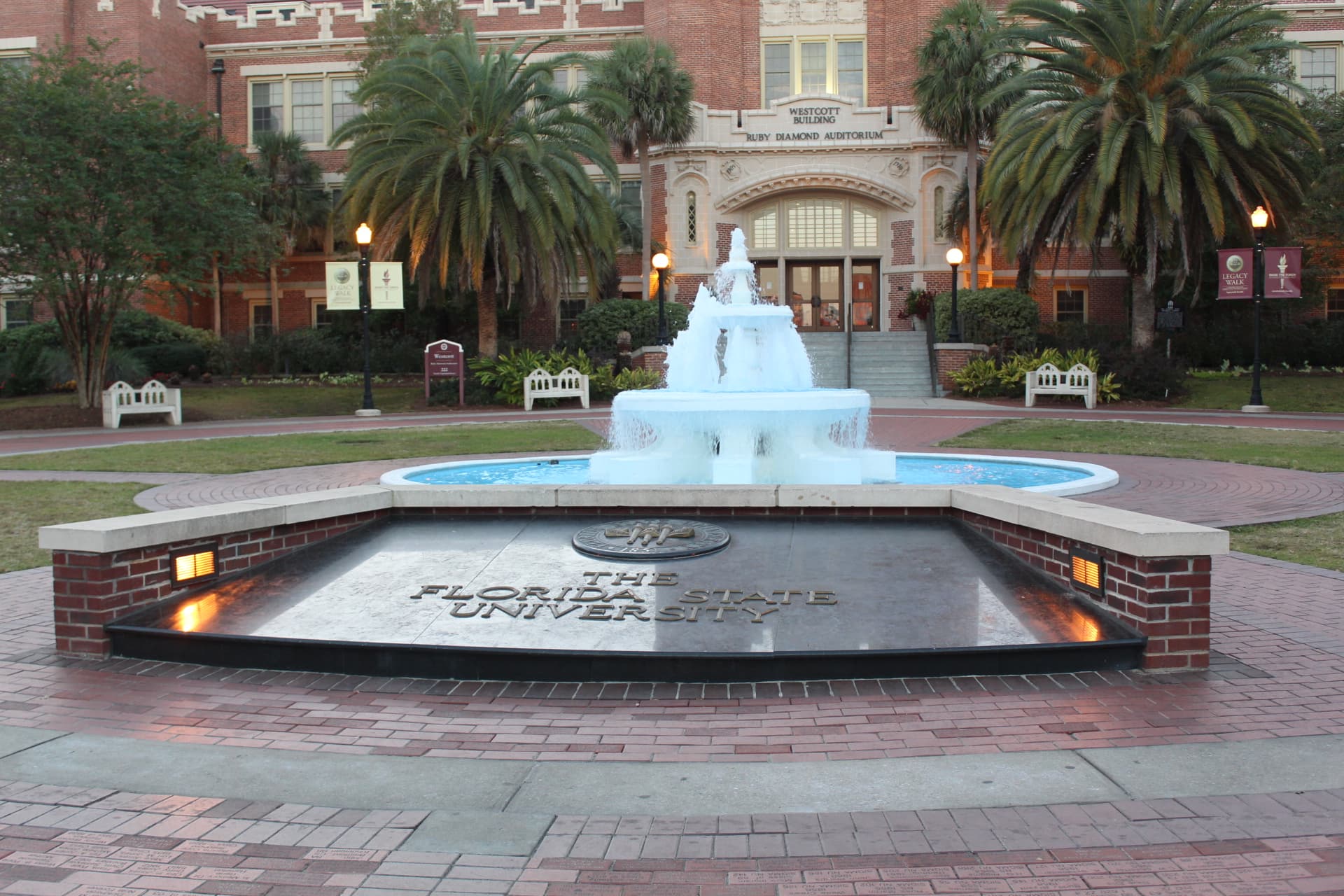
Safety is equally important. Late-night sexual assault and theft remain serious concerns on college campuses. Free, frequent, visible shuttle service reduces the need for students to walk alone or use unvetted rideshare services. Universities like FSU have recognized this: their Safe Ride program in Tallahassee prioritizes getting students home safely after dark, and the addition of electric vehicles has allowed them to expand coverage without proportional budget increases.
There's also a practical reality about student behavior. When shuttle service is reliable, frequent, and free, ridership climbs dramatically. Campuses don't solve parking problems by building more spaces. They solve them by making personal vehicles unnecessary. Electric transit is the lever.
Electric Campus Transit Models That Work
Not all electric transit deployments are built the same. Universities are experimenting with different approaches, and the data shows which models drive adoption.
The fixed-route model assigns specific shuttle circuits around campus, running on a regular schedule. This works well for large campuses with predictable traffic patterns. The on-demand model dispatches vehicles via smartphone app, similar to rideshare but without surge pricing. This works better for smaller campuses or as a supplement to fixed routes. Catawba College in Salisbury, NC deployed this hybrid approach with CatawbaGO, combining scheduled service with on-demand options. In just the fall 2025 semester, the program generated 4,520 rides, evidence that when students have easy access, they use it consistently.
The key difference between a successful deployment and a struggling one is often operational support. Many universities assume that buying vehicles and launching an app is enough. It isn't. Drivers need training, schedules need real-time adjustment, and the system needs someone accountable if service quality drops. Universities that outsource operations to a dedicated transit operator, rather than trying to manage it in-house, see better outcomes, lower costs, and faster time to launch.
Real Results: Campus Deployments Show the Path Forward
Data from active university deployments shows what's possible when electric campus transit is implemented correctly.
Oberlin College in Ohio operated a single electric vehicle for 12 months and logged 28,264 passengers. That's one vehicle, serving one campus, in one year. The ridership density illustrates the fundamental insight: when you remove barriers to transit use (free, electric, safe, convenient), demand is essentially unlimited on a college campus.
UNA Roar Ride in Florence, Alabama started with modest ridership but doubled engagement after making data-driven adjustments to routes and schedules. The program has now served 8,448 riders and continues to grow. This pattern repeats across deployments: initial launch generates baseline ridership, operators analyze usage data and optimize, and ridership jumps again. Universities that treat their transit program as a living system, gathering data, adjusting, and refining, see exponential growth.
The common thread across these deployments isn't vehicle brand or route design. It's consistent, reliable service with someone on the other end accountable for performance.
Carbon Impact: The Numbers That Matter
How much carbon does electric campus transit actually eliminate? The calculation depends on three variables: distance traveled, number of riders per trip, and the fuel source the transit replaces.
A typical diesel shuttle produces 135 grams of CO2 per kilometer. An electric shuttle charged from a mixed-grid power source produces roughly 25 grams of CO2 per kilometer, an 82% reduction. If a university moves 5,000 students per day from personal cars (averaging 1.2 occupants per vehicle) to shared electric shuttles (averaging 8 occupants), the daily carbon reduction is enormous. Over a year, moving student transportation from personal vehicles to high-occupancy electric transit can eliminate 500 to 1,500 metric tons of CO2 annually, depending on campus size and existing transportation patterns.
For universities with climate-neutral targets, this is material. Combined with renewable energy procurement and building efficiency upgrades, electric campus transit becomes a major lever in the overall emissions reduction strategy.
| Metric | Diesel Shuttle | Electric Shuttle | Impact |
|---|---|---|---|
| CO2 per km | 135g | 25g | 82% reduction |
| Annual fuel cost (5,000 mi/yr) | $3,500-$4,500 | $400-$600 | 87% savings |
| Annual maintenance | $2,500-$3,500 | $800-$1,200 | 65% savings |
| Passengers per trip (typical) | 6-10 | 6-12 | Electric allows more frequent runs |
Implementation Barriers and How to Overcome Them
Universities cite three main obstacles to launching electric transit: upfront capital costs, operational complexity, and the risk of low ridership.
Capital costs are real but increasingly addressed through federal and state grants. The Infrastructure Investment and Jobs Act (IIJA) provides funding for electric transit purchases, and many states have matching programs. Universities should budget 12-18 months for grant applications alongside service planning. This overlap ensures you're ready to launch immediately when funding is approved.
Operational complexity is the deeper issue. Running vehicles is not a core university competency. Hiring drivers, maintaining schedules, managing breakdowns, and monitoring safety requires dedicated expertise. Universities that try to operate shuttles in-house using existing maintenance staff or student drivers struggle with consistency and liability exposure. The alternative is outsourcing to a turnkey operator who handles vehicles, drivers, insurance, maintenance, dispatch, and real-time reporting as a single integrated service. This approach typically costs less than in-house operation and delivers better service.
Low ridership is a design problem, not a market problem. Every campus where free, electric, convenient transit was offered has seen high adoption. The issue is usually: service runs at inconvenient times, routes don't match actual demand, or students don't know the service exists. Launch requires a 4-6 week user education campaign, then data-driven route optimization within the first 90 days.
Frequently Asked Questions
How long does it actually take to launch an electric campus transit program?
From initial planning to first passenger, expect 45-60 days if you use a turnkey operator who owns vehicles, drivers, and technology. That timeline assumes you've already identified funding and have executive buy-in on routes and service hours. In-house operation typically takes 4-6 months because you're hiring drivers, purchasing vehicles, building internal processes, and training staff from scratch. For universities on a 2025 or 2026 launch target, now is the time to start planning.
What if ridership is lower than projected? Can we scale the service down?
Yes, but the real issue is usually poor route design or lack of awareness, not low demand. When Cove Inn Naples launched their electric shuttle service, they served 749 riders in under a month with just 5-minute wait times, proof that demand exists if service quality is high. If initial ridership is soft, adjust routes and timing based on data rather than reducing service and signaling to students that the program is unstable. Most programs see 20-40% ridership growth in months two and three as word spreads.
How do we handle the gap between what the shuttle program costs and student demand for other campus services?
Electric campus transit is often the most cost-effective safety and sustainability investment a university can make compared to alternatives like additional parking structures or expanded police patrols. The operational cost of electric transit per student served is typically 40-60% lower than funding equivalent safety programs through other means. Frame it as infrastructure, not an additional cost center. Universities that integrate transit costs into general operations budgets alongside parking and facilities report better long-term sustainability of the program.
Looking Forward
The universities building carbon-neutral campuses between now and 2035 will not do it through efficiency alone. They will do it by moving people differently. Electric campus transit is becoming table stakes for institutional sustainability claims, just as renewable energy procurement was five years ago. The technical and operational challenges have been solved. Vehicles exist, software works, operating models are proven. What remains is execution: universities that move decisively on transit planning in 2025 will have programs running in 2026, will have multiple years of data showing carbon impact and ridership patterns, and will have built a foundation for deeper mobility transformation as campus needs evolve.