Ridership Doubled After a Mid-Year Pivot: UNA’s Data-Driven Transit Story
Key facts
Client
University of North Alabama
What Slidr ran
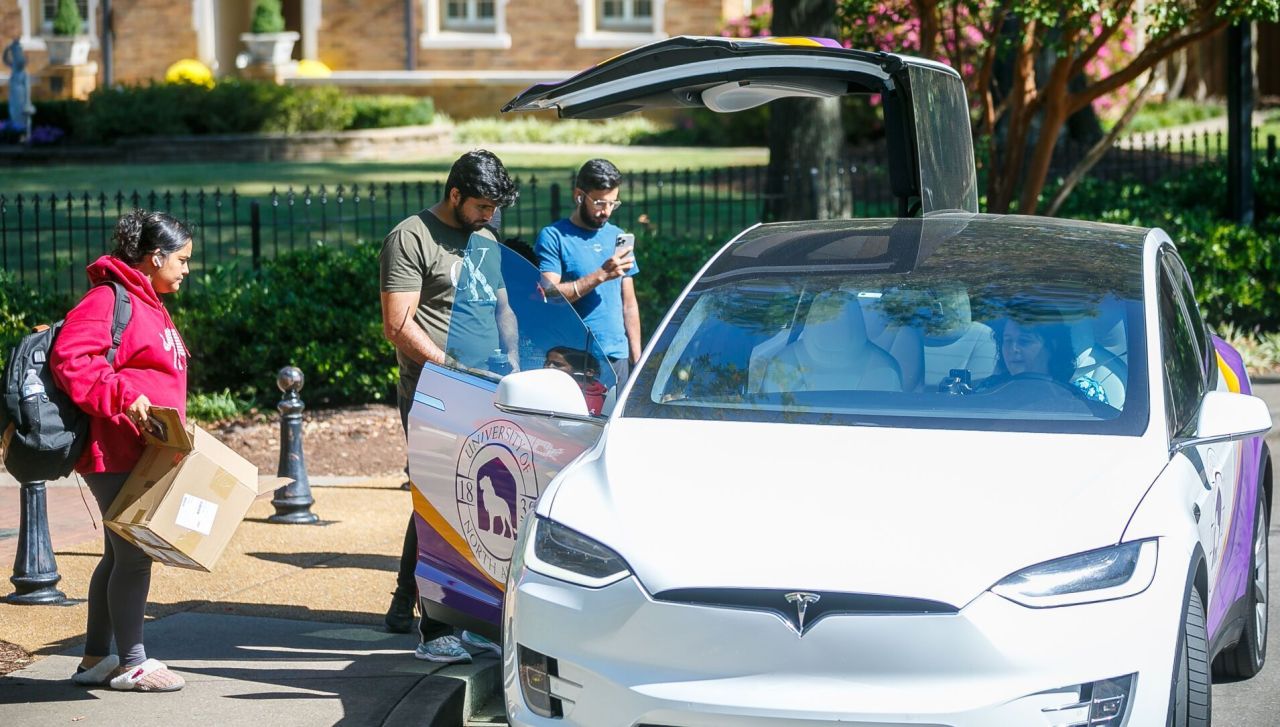
Roar Ride, a fixed-route and on-demand electric shuttle program using Tesla vehicles
Where
Florence, Alabama
Since
October 1, 2023
Fleet
3 Tesla vehicles at launch: 1 fixed route and 2 on demand; second semester: 1 fixed route and 3 on demand
Results, over the academic year
8,448 total riders and a 45% shared-ride rate; ridership doubled after the mid-year pivot to on-demand
UNA became one of Slidr’s early university partners, launching a dual-mode electric shuttle program using Tesla vehicles. What makes this case study compelling is the mid-year operational pivot: after analyzing first-semester data, Slidr moved from 1 fixed-route vehicle and 2 on demand to 1 fixed-route vehicle and 3 on demand, and ridership doubled in the second semester.
UNA wanted to provide students with safe, reliable campus transportation, especially during evening hours and between remote parking areas. The university had no internal transit expertise or infrastructure and wanted to reduce car dependence while offering a sustainable alternative. Evening safety was a particular concern for students walking between residence halls, academic buildings, and remote lots after dark.
02Our approach
Slidr launched Roar Ride with 3 Tesla vehicles in a hybrid model: 1 on a fixed route and 2 on demand in the first semester. When first-semester data showed higher demand for flexible rides, Slidr proactively shifted more capacity to on-demand service. This data-driven pivot is a core part of Slidr’s operating philosophy: we don’t just deploy and walk away, we optimize in real time. The second semester ran with 1 fixed-route vehicle and 3 on demand, with expanded Saturday coverage.
03The results
Over the academic year, UNA’s program served 8,448 total riders across nearly 3,000 on-demand rides and 3,800+ fixed-route boardings. The 45% shared-ride rate was the highest across all Slidr deployments, demonstrating strong pooling efficiency. Most importantly, the mid-year shift toward on-demand doubled ridership, proving that Slidr’s hands-on operational approach delivers measurable results. The 9,300+ miles driven were all-electric, with a 3.13-mile average ride distance and 10-minute average ride length. The 19-minute average wait time reflected high demand periods that the pivot helped address.
In their words
“Slidr solved a problem we’d been struggling with for years. It just works, and the students genuinely rely on it now.”
From a facilities standpoint, Slidr solved a problem we’d been struggling with for years. Getting students safely across campus, especially during evening hours and between remote parking areas, was a constant concern. Slidr came in, assessed our routes, and had a program running that our students actually use consistently. Ridership keeps climbing every semester. What I appreciate most is that their team handles the operational side so my staff isn’t stretched thin managing another transportation program. It just works, and the students genuinely rely on it now.
Kendra · Head of Facilities, University of North Alabama
Questions
Frequently asked questions
What is Roar Ride?
Roar Ride is the University of North Alabama's electric shuttle program in Florence, Alabama, which launched on October 1, 2023. Slidr ran it in a hybrid fixed-route and on-demand model, launching with 3 Tesla vehicles: 1 on a fixed route and 2 on demand.
How many riders did Roar Ride serve?
Over the academic year, the program served 8,448 total riders across nearly 3,000 on-demand rides and 3,800+ fixed-route boardings, with a 45% shared-ride rate.
What changed in the second semester?
After first-semester data showed higher demand for flexible rides, Slidr moved from 1 fixed-route vehicle and 2 on demand to 1 fixed-route vehicle and 3 on demand, and ridership doubled in the second semester.
Your program
When the data said “more on-demand,” we pivoted. Ridership doubled. That’s what a program built around its riders looks like.