 Slidr Team
Hotel shuttle programs have become a key amenity that drives guest satisfaction and operational efficiency. Learn how resort properties are using modern transit solutions to stand out.
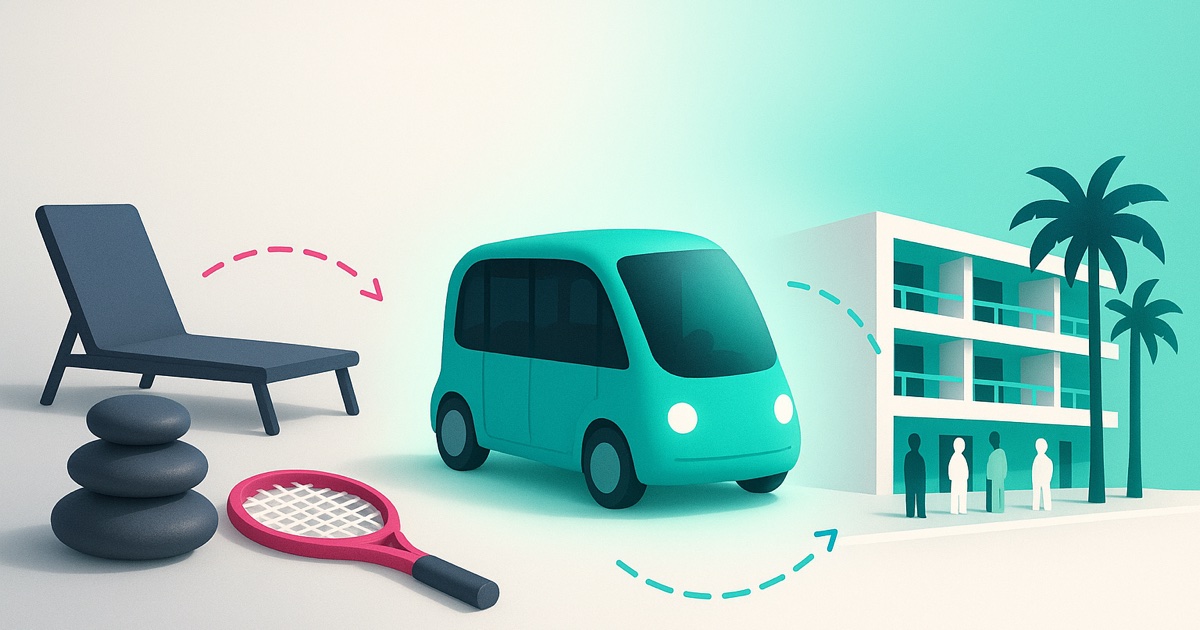
A hotel shuttle program is a dedicated transportation service that moves guests between the property, airports, attractions, and other destinations, either operated in-house or through a third-party provider. For properties in competitive resort markets, shuttle programs have moved from a nice-to-have amenity to a table-stakes competitive requirement. The question is no longer whether to offer shuttle service, but how to operate it efficiently, reliably, and in a way that reflects the quality standards of the property itself.
Why Hotel Shuttle Programs Matter in Resort Markets
Resort guests expect seamless transportation experiences as part of the overall property experience. A guest arriving at an airport should not spend a long time calling a front desk to arrange a ride. A couple wanting to visit restaurants in the nearby town should not worry about finding a taxi or paying surge-pricing rideshare rates.
Properties that solve this problem gain measurable competitive advantages. Guests leave higher satisfaction scores when transportation is included and reliable. They spend more money on-property because they're not researching alternatives. And they're more likely to return and recommend the property to others.
The operational challenge has always been cost and complexity. Hiring and managing dedicated drivers, maintaining vehicles, scheduling routes, and dealing with liability has traditionally required significant infrastructure and management overhead. This is why many properties either skipped shuttle service entirely or operated minimal, inconsistent programs that ultimately hurt their brand reputation.
The Modern Microtransit Solution for Hotels
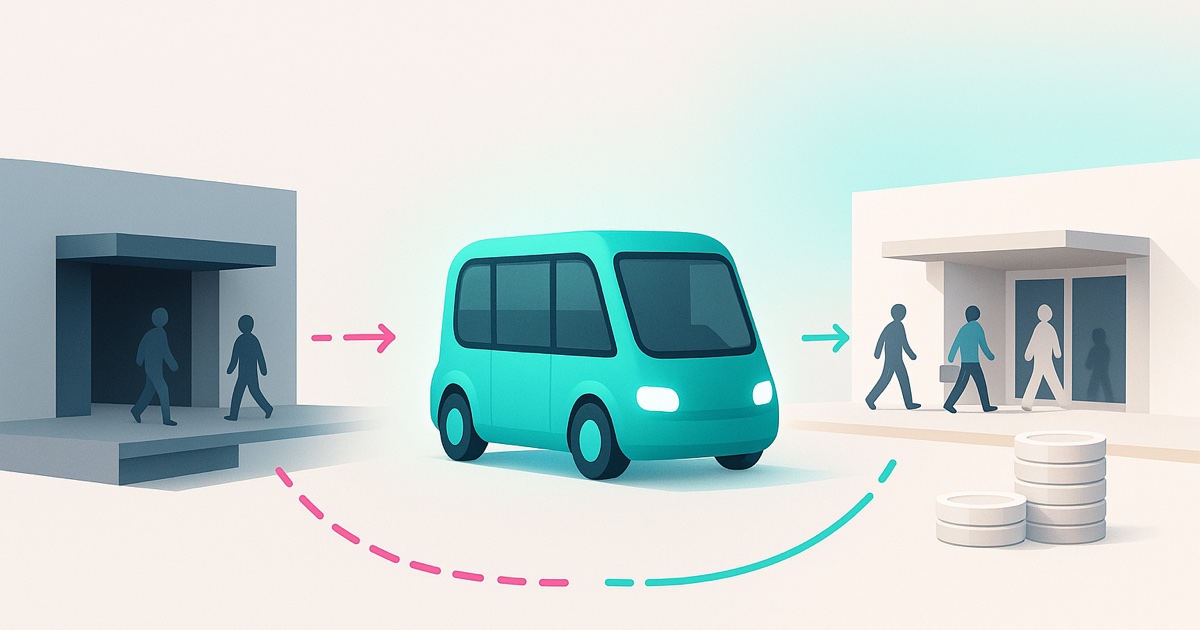
Turnkey microtransit operators have fundamentally changed the economics and execution of hotel shuttle programs. Rather than owning vehicles, hiring drivers, and managing operations in-house, properties now contract with third-party operators who handle everything: the vehicles, the drivers, insurance, maintenance, scheduling, the mobile app, and dispatch technology. The property pays one flat monthly fee. No hidden costs. No per-ride charges. That fee depends on fleet size, service hours, vehicle type, and service model. Discuss your project.
This model is already proving itself in hospitality settings. Cove Inn in Naples, Florida, runs an on-demand guest shuttle that completed 1,136 rides and carried 2,626 passengers from March 4 to September 27, 2026 (as of September 2026). That's not a resort making it work despite operational friction. That's a property that solved a guest pain point and saw immediate adoption because the service was reliable and frictionless.
The data-driven route optimization that modern microtransit platforms provide also improves efficiency at scale. Rather than running fixed routes on a schedule regardless of demand, the system learns where guests actually want to go and adapts service to match real patterns. This reduces empty vehicle miles and improves response times.
How Leading Properties Deploy Hotel Shuttle Programs
The most effective hotel shuttle programs follow a few consistent patterns. First, they're visible and easy to access. Guests should be able to request a shuttle through the property's mobile app or at the front desk with equal ease. Second, the vehicles reflect the property's brand and quality standards. A luxury resort with a dated shuttle van creates a jarring experience. Third, the program covers the most valuable routes first: airport runs, town shuttle service to dining and entertainment, and in-campus circulation for larger resorts.
Launch timelines matter as well. Most third-party operators can have a shuttle program operational within 30 to 45 days of contract signature. This means a property can be solving guest transportation problems within weeks rather than spending many months building out an internal operation.
Data Comparison: Operating Models for Hotel Shuttles
| Operating Model | Initial Investment | Monthly Overhead | Time to Launch | Scalability |
|---|---|---|---|---|
| In-House Operation | High (vehicle, hiring, licensing) | Higher (salary, fuel, maintenance, insurance) | Several months | Requires hiring, training, scheduling infrastructure |
| Turnkey Microtransit | Low (onboarding, tech setup) | Predictable (all-inclusive operator fee, varies with fleet size) | 30 to 45 days | Operator adds capacity; property adds no overhead |
| Rideshare Contract (Uber/Lyft) | None | Variable (per-ride charges, surge pricing) | Immediate | Unpredictable pricing and service quality |
Real-World Evidence from Hospitality and Similar Deployments
The Cove Inn example is instructive because it shows what happens when a property removes friction from guest transportation. The shuttle carried 2,626 passengers from March 4 to September 27, 2026 (as of September 2026). That's not a niche service for a handful of guests. That's a core amenity that guests actively want and use.
Similar patterns emerge in comparable microtransit environments. At universities and planned communities, Slidr deployments have demonstrated that when transportation is reliable, convenient, and included in the guest or resident experience, adoption rates far exceed initial projections. UNA Roar Ride in Florence, Alabama saw ridership double after shifting more of its fleet to on-demand service in the second semester. Catawba College in Salisbury, North Carolina logged 13,696 rides from Aug 20, 2025 to Sep 30, 2026 (as of September 2026) across a single campus. These numbers matter because they show sustained, high-volume usage patterns that translate directly to guest satisfaction and operational validation.
Integration with the Broader Guest Experience
The most sophisticated hotel shuttle programs don't exist in isolation. They're integrated into the property's booking flow, mobile app, and concierge service. A guest books a room and sees shuttle service highlighted as an included amenity. During check-in, the front desk staff can request a shuttle with a single click. The guest receives a push notification when the vehicle is two minutes away. This level of integration requires coordination between the property's tech stack and the transportation operator, but it's table-stakes for premium properties.
Properties that bundle shuttle service with other amenities see compounding benefits. A guest who arrives via shuttle, spends an evening in an on-property restaurant served by the shuttle service to nearby entertainment, and departs via shuttle feels like the property has solved a significant pain point. That experience influences satisfaction scores, online reviews, and return visit likelihood.
Frequently Asked Questions
What's the realistic ROI on a hotel shuttle program?
ROI is difficult to measure in traditional terms because guest satisfaction, loyalty, and online reputation benefits are hard to monetize precisely. However, properties that offer reliable shuttle service see measurable improvements in guest review scores (particularly around convenience and amenities), higher repeat booking rates, and ability to justify premium pricing to guests who value the amenity. The operational cost is typically lower than that of many competing amenities.
What happens if demand exceeds the shuttle capacity during peak times like holidays?
Turnkey operators manage this by scaling vehicle count up or down on contract. A property can specify peak-season vehicle requirements separately from baseline service. During holiday weeks, an operator might add a second shuttle for a specific period, and both the property's budget and the guest experience remain stable. The operator shoulders the hiring and operational complexity of temporary scaling.
Can we mandate shuttle use instead of allowing guests to use rideshare or rental cars?
No reputable property would attempt this because it creates guest friction and negative reviews. Instead, the most effective approach is to make shuttle service so convenient and attractive that guests choose it voluntarily. Ensuring the shuttle runs frequently, covers the right routes, and is frictionless to book accomplishes this goal without heavy-handed policies.
Closing
Hotel shuttle programs have transitioned from a back-office logistics problem to a front-and-center brand differentiator. In competitive resort markets, the quality and reliability of guest transportation now directly influences booking decisions and satisfaction scores. Turnkey microtransit operators have eliminated the capital and operational barriers that historically made shuttle programs only viable for very large properties. For resort properties of any significant size, the question is no longer whether the operational complexity justifies a shuttle program. It's whether your property can afford not to offer one while competitors do.