 Slidr Team
Practical guidance for HOA and CDD decision-makers on the five critical questions to answer before launching a community shuttle program.
Community associations across Florida and the Sun Belt are fielding increasing resident interest in shuttle service. Whether the motivation is reducing golf cart traffic, improving access for older adults, or simply adding a modern amenity, the conversation is happening in board rooms and annual meetings everywhere. But enthusiasm alone does not make a successful program. Before committing community funds and political capital, every association should rigorously answer five questions.
Question 1: What Routes Will You Run?
This seems straightforward, but it is where most programs either succeed or struggle from day one. The instinct is to try to serve everywhere. Resist it.
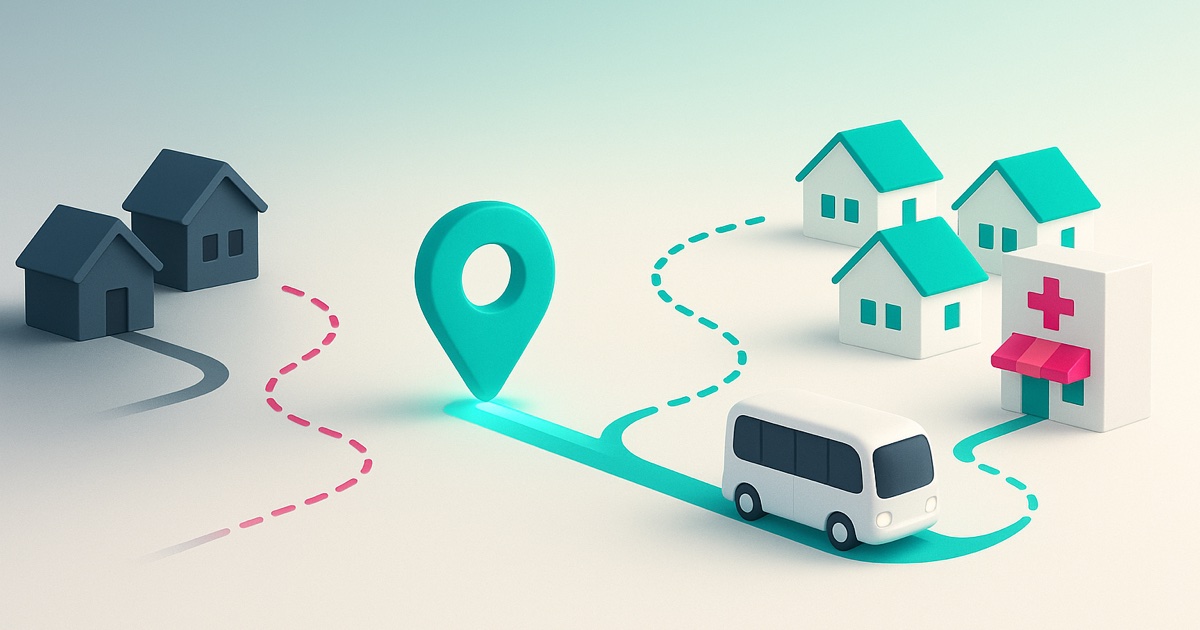
Start by mapping the handful of destinations that generate the most resident trips. In most communities, this list is predictable: the town center or main retail area, the clubhouse or recreation center, the fitness facility, the nearest medical complex, and the main dining clusters. Survey residents, but also look at existing traffic patterns. Where are the busiest parking lots? Where do golf carts and personal vehicles cluster during peak hours?
Design your initial route to connect these high-demand points with the residential areas that are farthest from them. A resident who lives across the street from the clubhouse does not need a shuttle. A resident who lives across the community in the newest phase of development does.
Practical guidance:
- Keep the initial core loop short enough for a quick complete circuit. Longer loops mean longer wait times and lower ridership.
- Place stops at visible, comfortable locations. A stop at the entrance to a parking lot is usable. A stop in the middle of a parking lot behind a dumpster is not.
- Plan for expansion, but do not promise it before the first route proves itself. Tell residents, "We will add Route 2 when Route 1 hits its daily ridership target," and then deliver on that commitment.
Question 2: How Will You Fund It?
The funding question is where board discussions get serious. Residents want the service; they are less enthusiastic about paying for it. Transparency and context are your best tools.
For CDD-governed communities, the cleanest approach is incorporating shuttle costs into the annual O&M assessment. The per-home cost depends on fleet size, service hours, vehicle type, and service model, and it drops as the number of homes sharing the program grows, so larger communities benefit most. Frame the program in terms residents understand: it provides unlimited access for every household member. Discuss your project.
For HOA-governed communities without CDD assessment authority, options include:
- HOA dues increase approved by vote
- Special assessment for a pilot period
- Reserve fund allocation if the community's reserves are healthy
- Developer contribution during active build-out phases
- Sponsorship revenue from community businesses
The strongest approach combines a stable base funding source (assessment or dues) with supplemental sources (sponsorships, grants) that reduce the per-home cost. Do not build your entire funding model on grants or sponsorships alone, because those sources can fluctuate year to year.
Question 3: Who Operates and Maintains It?
This is the question that separates programs that thrive from programs that become board headaches. Community associations are not transportation companies. The skills, insurance, regulatory knowledge, and management capacity required to run a shuttle program safely and reliably are specialized.
Your options are:
- Self-operation: The association hires drivers, purchases or leases vehicles, carries commercial vehicle insurance, manages maintenance, and handles technology. This approach gives maximum control but requires significant staff time and exposes the association to operational liability. It is generally advisable only for very large communities with professional management companies that have transportation experience.
- Turnkey operator partnership: A company like Slidr provides vehicles, drivers, technology, insurance, maintenance, and management as a bundled service. The association pays a monthly or annual fee for a defined service level. This approach transfers operational risk and complexity to the operator while giving the association the service its residents want.
- Hybrid model: The association owns the vehicles, and the operator provides drivers, technology, and management. This can reduce ongoing costs if the association has capital to invest in vehicles, but it retains maintenance and replacement risk.
For most community associations, the turnkey model is the right answer. The cost premium over self-operation is modest, and the reduction in board time, liability, and operational complexity is substantial.
Question 4: What Technology Do Residents Need?
Technology should lower the barrier to riding, not raise it. The ideal system works for the young professional who lives on their phone and the retiree who uses a flip phone.
For app-enabled riders, the experience should be simple: download the app, create a profile, see the shuttle on a map, request a ride or check the next arrival at a stop. A few taps to request a ride. Real-time tracking so you know exactly when to walk to the stop. Push notifications when your ride is arriving.
For residents who do not use smartphones, the fixed-route component provides predictable service at published times. A posted schedule at each stop, a phone number to call for ETAs, and visible vehicles on a consistent loop ensure that no resident is excluded from the service. Some communities also install simple digital displays at high-traffic stops showing the next arrival time.
The most important technology decision is not what the app looks like. It is whether the system can handle both scheduled and on-demand service from a single platform, and whether the operator provides a real-time administrative dashboard so community management can monitor service quality without calling the operator for updates.
Question 5: How Do You Measure Success?
Before launching, define what success looks like in specific, measurable terms. Vague goals like "residents like it" do not survive the first board meeting where a skeptical member asks whether the program is worth the money.
Recommended metrics and targets for the first year:
- Monthly ridership: Set a monthly ridership target scaled to the size of your community for the first months after launch. Healthy programs keep growing monthly rides well beyond that early stretch.
- Cost per ride: Well-utilized programs keep cost per ride low and falling. If cost per ride stays high after the first several months, investigate route design and marketing.
- Average wait time: For on-demand rides, target short, predictable waits. For fixed route, target frequent headways during peak hours.
- Rider satisfaction: Survey quarterly. Target consistently high ratings.
- Unique riders per month: Track how many different households use the service. Growing unique riders means the program is expanding its reach, not just serving the same small group.
Share these metrics with residents quarterly through the community newsletter, app, or website. Transparency builds support and justifies continued investment.
Ready to Start the Conversation?
If your community association is exploring shuttle service, these five questions provide the framework for a productive evaluation. Slidr works with community boards at every stage, from initial feasibility analysis through program design, launch, and ongoing operations. We are happy to present to your board, provide financial models tailored to your community, and answer the questions that matter most to your residents and stakeholders.