University microtransit is on-demand, app-dispatched transportation that uses smaller electric vehicles and real-time routing to move students, faculty, and staff across campus and to nearby destinations. Unlike fixed-route shuttle buses that run the same loop whether the vehicle is full or empty, microtransit responds to actual rider demand. Students request a ride through a mobile app, and a driver arrives in minutes. The service adapts to where people need to go and when they need to get there, rather than forcing riders to conform to a predetermined schedule.
For campus transportation directors, student affairs administrators, and university leaders evaluating their shuttle programs, microtransit represents a practical shift from legacy bus operations to flexible, managed electric transportation. This guide covers how university microtransit works, what it replaces, how it performs in practice, and what to evaluate before launching a program.
What University Microtransit Replaces
Most university shuttle systems were designed decades ago around fixed routes and fixed schedules. A bus runs a loop every 15 or 20 minutes, stopping at the same locations regardless of demand. During peak class changes, the bus is full. During evenings, weekends, and breaks, it runs nearly empty. The university still pays for the driver, the fuel, the insurance, and the maintenance whether the bus carries 40 passengers or 2.
University microtransit replaces this model with demand-responsive service. Instead of a bus running a loop, smaller electric vehicles are dispatched to where riders actually are. The dispatch platform groups nearby ride requests together, creating efficient multi-passenger trips without fixed stops or fixed schedules. This means the service scales naturally with demand: more vehicles during busy periods, fewer during quiet ones.
Microtransit also replaces or supplements late-night safe ride programs that many universities operate using aging vans, volunteer drivers, or phone-based dispatch. Modern microtransit platforms handle ride requests, driver assignment, real-time tracking, and rider communication through a single app, eliminating the operational friction that limits many campus safe ride services.
How It Works on a University Campus
A student opens the rider app, enters a pickup location and destination, and requests a ride. The dispatch system assigns the nearest available vehicle and provides an estimated arrival time. The driver picks up the student and any other riders heading in a similar direction, and delivers them to their destinations. The entire process takes minutes.
Service zones are defined by the university. A campus might set a zone that covers the main academic campus, residential areas, and key off-campus destinations like grocery stores, downtown areas, or transit hubs. Hours of operation are also set by the university. Some programs run during evening and late-night hours only; others operate throughout the day.
Rides are typically free to students, faculty, and staff. The university pays for the service through a contract with the microtransit operator, often funded through existing transportation budgets, student fees, or a combination of both.
The Turnkey Operator Model
Universities that adopt microtransit generally choose between building an in-house operation or contracting with a turnkey operator. The in-house approach requires the university to purchase or lease vehicles, hire and manage drivers, secure commercial insurance, maintain the fleet, and license or build a dispatch technology platform. Each of those components carries its own complexity and cost.
A turnkey operator handles all of it. The operator provides the vehicles, employs the drivers, carries the insurance, manages maintenance, operates the rider app and dispatch platform, and delivers real-time reporting to the university. The university defines the service parameters (zones, hours, eligibility) and the operator executes.
This model eliminates the most common operational bottleneck for university transportation departments: driver recruitment and retention. Managing a workforce of drivers involves background checks, training, scheduling, and ongoing HR administration. For a university whose core mission is education, that operational burden is a distraction. A turnkey operator absorbs it entirely.
Slidr operates under this turnkey model. The university gets a fully managed electric ride program under a single contract, with no capital outlay for vehicles, no driver staffing responsibilities, and no technology development. Because there is no vehicle to procure, no drivers for the university to recruit, and no platform to build, the program can be stood up quickly rather than waiting on a traditional bus procurement cycle.
Real Performance: CatawbaGO and FSU Safe Ride
The value of university microtransit is measured in outcomes, not proposals. Two active deployments illustrate what the model delivers in practice.
CatawbaGO at Catawba College
CatawbaGO is the on-demand electric ride service Slidr operates for Catawba College in Salisbury, North Carolina. In its first full year of service, CatawbaGO delivered 10,647 rides and carried 14,785 riders, with 606 unique users and an average driver rating of 4.94 out of 5. The college did not buy vehicles, hire drivers, or build dispatch software. Slidr brought the entire operation, launched it, and ran it, while the college maintained full visibility through real-time reporting. The program renewed automatically into a second year.
FSU Safe Ride at Florida State University
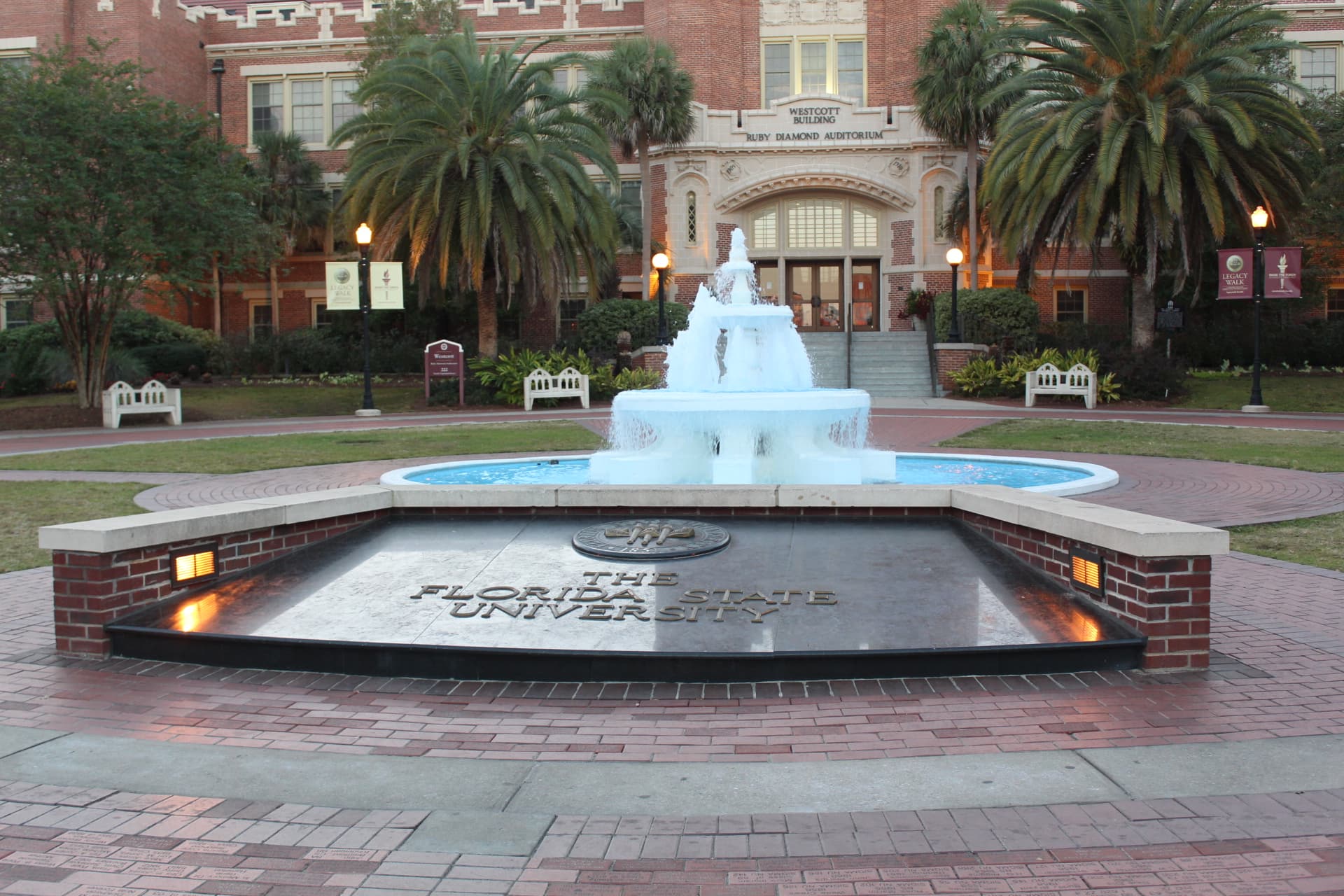
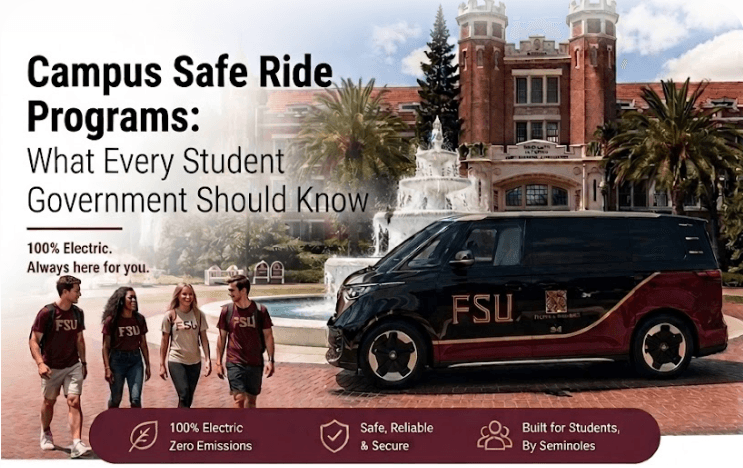
FSU Safe Ride is the on-demand safe ride program Slidr operates at Florida State University in Tallahassee. The program serves the FSU campus and surrounding areas, providing free electric rides to a university community of more than 40,000 students. Students request rides through the app and travel safely across campus and to nearby destinations during evening and late-night hours. FSU Safe Ride operates as part of the university's campus safety services.
These two deployments represent different scales of university microtransit. Catawba College is a small liberal arts college. Florida State is a major research university. The same turnkey model serves both, scaled to campus size and budget.
What to Evaluate Before Launching a Program
University leaders considering microtransit should evaluate five factors before selecting an operator or structuring a program.
1. Service scope and zone design
Define where the service will operate. Campus-only zones are simpler to launch but may miss key destinations that students need to reach. Zones that extend to nearby commercial areas, housing complexes, and transit connections typically see higher adoption because they solve more of the student's transportation needs.
2. Hours of operation
Late-night service (typically 7 p.m. to 3 a.m.) addresses safety-critical demand. Daytime service covers class changes, campus errands, and accessibility needs. Many universities start with evening-only service and expand hours based on ridership data.
3. Fleet composition
Electric vehicles are the standard for new microtransit deployments. They eliminate fuel costs, reduce maintenance requirements, produce zero tailpipe emissions, and operate more quietly than gas or diesel vehicles. For a campus environment, the reduced noise footprint is a genuine quality-of-life benefit.
4. Operator accountability
A turnkey contract should include service level agreements that specify vehicle availability, response times, driver training standards, and reporting cadence. The university should have real-time visibility into ridership, wait times, and service coverage through a reporting dashboard. If the operator does not deliver on these commitments, the contract should include remedies.
5. Funding structure
Microtransit programs are typically funded through existing transportation budgets, student activity fees, or a combination of both. The turnkey model converts what would be a capital expense (buying buses) into a predictable operational expense (a monthly service fee). This simplifies budgeting and eliminates the procurement cycles associated with vehicle purchases.
University Microtransit and Campus Safety
Campus safety after dark is one of the strongest drivers of university microtransit adoption. Fixed-route shuttle buses stop running in the evening or operate infrequently, leaving students to walk alone through poorly lit areas or rely on personal vehicles. On-demand microtransit brings a vehicle directly to the student, reducing exposure time and eliminating the need to wait at remote bus stops.
The rider app adds a layer of accountability. Every ride is logged with pickup and dropoff locations, timestamps, and driver identification. Universities can access this data for safety reporting and incident review. For students, the app provides real-time vehicle tracking and estimated arrival times, reducing the anxiety of waiting for a ride late at night.
At Catawba College, CatawbaGO's 4.94 average driver rating across more than 10,000 rides reflects consistent, reliable service quality.
Sustainability and Institutional Goals
Most universities have committed to reducing their carbon footprint. Electric microtransit directly supports those commitments by replacing diesel or gasoline shuttle operations with zero-emission vehicles. For universities that report on sustainability metrics to their boards, accreditors, and prospective students, electric campus transportation is one of the most visible and frequently used sustainability initiatives available.
Beyond emissions, electric vehicles reduce on-campus noise pollution and eliminate the smell of diesel exhaust near academic buildings and residence halls. These are tangible quality-of-life improvements that students and faculty experience daily.
Frequently Asked Questions
How is university microtransit different from a regular campus shuttle?
A campus shuttle runs a fixed route on a fixed schedule. Microtransit is on-demand: students request a ride through an app and a vehicle is dispatched to their location. There are no fixed stops or predetermined loops. The service responds to where riders actually need to go.
What does a turnkey microtransit operator provide?
A turnkey operator provides everything: vehicles, drivers, insurance, maintenance, the rider app, dispatch technology, and real-time reporting. The university defines the service zones, hours, and eligibility, and the operator handles all operations.
How quickly can a university launch a microtransit program?
Under a turnkey model, the operator brings the full operation ready to deploy. There is no vehicle procurement cycle, no driver recruitment for the university to manage, and no technology platform to build, so a program can launch much faster than a traditional bus purchase allows.
How do students request a ride?
Students download the rider app, enter a pickup location and destination, and request a ride. The app assigns the nearest available vehicle and shows an estimated arrival time. Students can track the vehicle in real time.
Is university microtransit only for late-night safe rides?
No. While late-night safety is a common starting point, microtransit can operate during any hours the university chooses. Daytime service covers class changes, campus errands, accessibility transportation, and connections to off-campus destinations.
How is the program funded?
Programs are typically funded through existing transportation budgets, student activity fees, or a combination of sources. The turnkey model converts vehicle capital expenses into a predictable monthly service fee, simplifying budgeting for the university.