 Mike Trombino, Founder
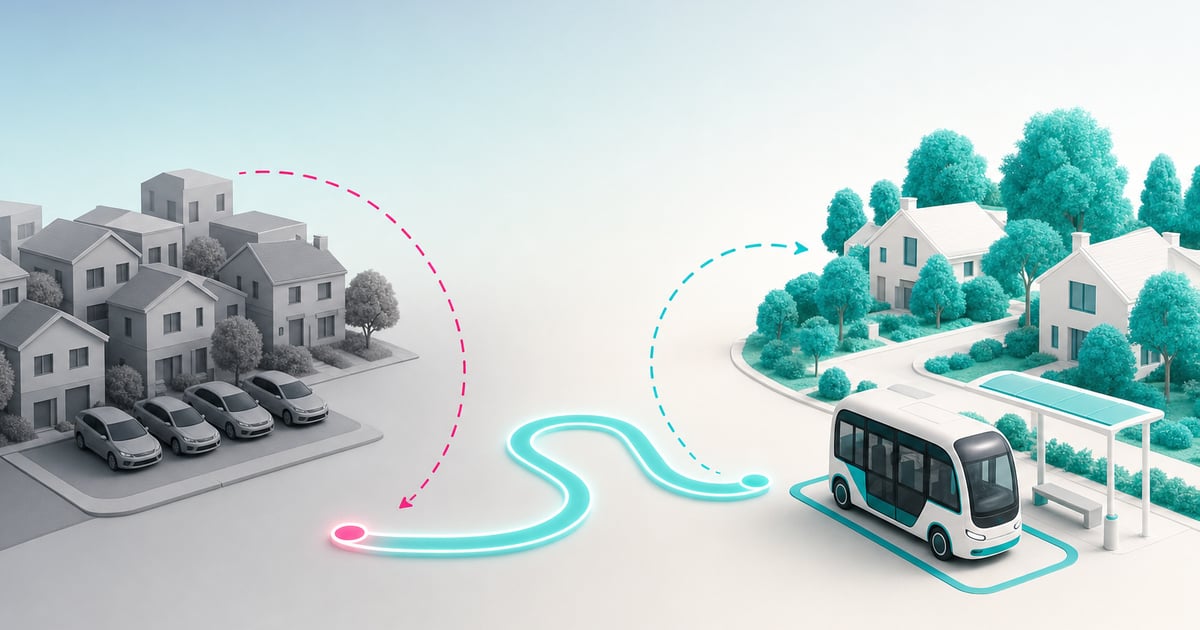
Planned communities compete on amenities. Today's buyers expect transportation as a core benefit, not an afterthought. Here's what moves the needle.
Key takeaways
- Transportation is now a core planned community amenity that influences buyer decisions, not a convenience add-on.
- Residents expect seamless, branded mobility integrated into their daily routines: shopping trips, dining, events, and social activities.
- Community-branded transportation programs can be operated fully by a partner, power existing vehicles and drivers, or improve programs already running.
Planned community buyers no longer evaluate neighborhoods on pools, fitness centers, and clubhouses alone. Today's shoppers research transit options, elder mobility, and how they will move around the community without a personal vehicle. Transportation has become a core planned community amenity that shapes the buying decision. Developers and marketing leaders who understand this shift gain a competitive edge.
The question is no longer whether a community should offer transportation. It's what form that transportation takes, how it reflects the community's brand and values, and whether it truly serves resident needs or sits underutilized on the sidelines. For how this works in practice, see Slidr's community transportation programs.
What planned community amenities actually influence buyer decisions?
Residents evaluate planned communities across multiple layers. They tour the architecture, walk the pathways, review the amenity list. But the amenities that move a buyer from interested to committed are those that integrate seamlessly into daily life.
Transportation ranks differently depending on community type. Active adult communities prioritize mobility for residents with limited driving comfort or access to personal vehicles. Mixed-use developments need retail connections and event access. Resort-style communities compete partly on the guest experience their residents can offer family visitors. In each case, a branded transportation program signals that the developer understands how residents will actually live there.
When transportation is missing or fragmented, the entire amenity proposition feels incomplete. A wellness center loses appeal if residents struggle to reach it. Dining venues and retail spaces sit less trafficked. Social programs and events draw smaller crowds because getting there is friction.
How do residents expect planned community transportation to work?
Today's residents expect transportation to be part of the community fabric, not bolted on as an afterthought. They expect:
- Branding and identity. The app, the vehicles, the experience should reflect the community's name and style. When transportation is co-branded or generic, it feels transactional rather than part of community life.
- Reliability and consistency. Service should run on a schedule residents can depend on. Sporadic or limited hours create uncertainty and reduce actual usage.
- Coverage that matters. Routes should connect residents to amenities within the community, nearby retail and dining, medical appointments, and social destinations they actually visit.
- Ease of booking. Whether residents call, use an app, or hail a ride, the booking experience should be simple and fast. Technology should serve the resident, not complicate their day.
- Inclusivity. Transportation that serves active, mobile residents is good. Transportation that creates mobility for residents with limited driving options is transformative.
When transportation checks these boxes, it becomes an amenity residents mention first when recommending the community to friends. When it misses them, it becomes invisible or worse, a source of frustration.
What operating models are developers choosing for community transportation?
Developers have three paths to community-branded transportation that works.
Partner-operated programs. A developer engages a transportation partner to operate a complete program. The partner manages vehicles, drivers, insurance, technology, scheduling, and day-to-day operations. The community keeps its brand front and center; the partner handles logistics behind the scenes. This approach makes sense when a community wants high-quality, branded mobility without building an operations team from scratch.
Partner-powered existing fleets. Some communities already have golf carts, vans, or other vehicles. A partnership can enhance those assets by adding scheduling software, route optimization, driver training, compliance management, and booking systems that the community's brand carries. The community keeps its vehicles and drivers; the partner technology and expertise multiply their effectiveness.
Program improvement and expansion. Communities already running transportation programs can partner to upgrade service quality, extend hours, improve reliability, add analytics, or expand routes. The existing team stays in place. The partnership layers on the operational rigor and technology that move a good program to one residents love.
Transportation that serves active, mobile residents is good. Transportation that creates mobility for residents with limited driving options is transformative.
The right path depends on the community's size, budget, operational capacity, existing assets, and goals. What all three share is that the community's brand, voice, and values stay visible to residents. The transportation experience belongs to the community, not to a vendor.
How does community-branded transportation compare to other planned community amenities?
| Amenity Type | Resident Use Varies By | Competitive Advantage | Brand Impact |
|---|---|---|---|
| Fitness center, pool, clubhouse | Lifestyle, age, interests | Quality facilities and programming | Moderate; supports community image |
| Retail, dining, services on-site | Convenience, pricing, variety | Walkability, mixed-use density | High; core to daily experience |
| Community-branded transportation | Mobility needs, work schedule, life stage | Universal access, reliability, inclusion | Very high; enables use of all other amenities |
| Safety, security, managed maintenance | Perceived risk, property care standards | Trust and peace of mind | High; foundational to satisfaction |
Transportation stands apart because it creates access. A resident who cannot drive confidently, who prefers not to own a car, or who simply wants a break from behind the wheel depends on how the community solves mobility. When that solution is branded and reliable, it becomes a reason to choose one community over another.
Developers building active adult communities, senior living, urban mixed-use developments, and resort-style neighborhoods are recognizing that community transportation is not a nice-to-have. It is a core amenity that influences appeal, supports resident retention, and reduces the friction between wanting to participate in community life and being able to get there.
How can developers start offering transportation as a planned community amenity?
Community transportation can be built from the ground up or layered onto existing mobility assets. The first step is understanding what residents need. Do they need daily rides to work? Weekly trips to medical appointments and shopping? Evening access to dining and entertainment? Peak demand on event days? The answers shape the service model.
The second step is choosing an operating approach that matches the community's size, budget, and in-house expertise. Some communities manage this alongside other operations. Others partner with an organization that specializes in running community transportation programs, so the community's energy stays on marketing, sales, and resident experience while operations run smoothly behind the scenes.
Either way, the community keeps control of branding, pricing, booking policy, and the resident experience. Slidr operates complete transportation programs, powers existing vehicles and drivers with technology and expertise, or improves mobility programs already running. The service carries your community's brand and identity. Discuss your community with an expert who can walk you through the options and what makes sense for your property and market.
For planned communities, the pages that match this question are how the service is set up.
Frequently Asked Questions
Why should planned communities offer transportation as an amenity?
Transportation removes barriers to resident access of other amenities, services, medical appointments, and social activities. When residents struggle to get around, they use fewer community services, attend fewer events, and report lower satisfaction. Branded, reliable mobility creates a reason to choose one community over another and signals to buyers that the developer understands how residents will actually live there.
What type of transportation works best for a planned community?
The best approach depends on community size, resident demographics, local destinations, and budget. Active adult and senior communities often prioritize medical appointments, shopping, and social activities. Mixed-use developments may need work commute or retail access. Event-focused communities may need peak-day capacity. The key is matching the service model to actual resident mobility patterns.
Do we need our own drivers and vehicles, or can we partner with someone?
You have three options: operate a complete program yourself, partner with an organization to run operations while your community keeps its brand and vehicles, or improve a program already running. Many developers choose to partner because it removes the burden of hiring, training, insurance, and compliance while keeping transportation as a branded community service.
How much does community transportation cost?
Cost depends on fleet size, service hours, vehicle type, and service model (on-demand versus fixed-route, for example). To understand what makes sense for your community, discuss your project with a transportation expert who can review your resident needs, local market, and operating capacity.
Can we rebrand transportation that's already running?
Yes. Existing golf cart fleets, shuttle programs, or mobility services can be enhanced with better booking technology, driver training, operational improvements, and community branding. Many developers choose this path when they want to upgrade service quality without starting from zero.
Sources
- Slidr community transportation solutions, 2024. https://www.rideslidr.com/solutions/communities/
- Why choose Slidr, 2024. https://www.rideslidr.com/why-slidr/
- Slidr contact page, 2024. https://www.rideslidr.com/contact/
TODO for Mike: TODO for Mike: Amenity comparison table needs Slidr survey or research data on what planned community buyers prioritize. Currently populated with general logic; replace with verified data if available.