Starting college is one of the biggest transitions you will experience, and one of the most underestimated challenges is simply figuring out how to get around. Whether your campus is a compact urban quad or a sprawling suburban complex spread across hundreds of acres, knowing your transportation options from day one will save you time, money, and stress throughout your first year.
This guide covers everything incoming students need to know about campus transportation, from the practical logistics of parking permits to the modern tools that make getting around easier than ever.
Should You Bring a Car?
This is the first question most freshmen face, and the honest answer depends heavily on your specific campus. At large universities in suburban or rural settings, a car provides flexibility for grocery runs, weekend trips, and off-campus activities. At urban campuses with strong public transit, a car is often more hassle than it is worth.
Before deciding, research these factors:
- What does a student parking permit cost? At many universities, annual permits range from $200 to $1,200, and freshman permits are often restricted to remote lots far from residence halls.
- Where are freshmen allowed to park? Many schools prohibit first-year students from parking on campus entirely or limit them to peripheral lots that require a shuttle ride to reach academic buildings.
- What campus shuttle service is available? If the university operates frequent shuttles between residence halls, academic buildings, dining facilities, and off-campus commercial areas, a car may be unnecessary for daily life.
- What does the surrounding community look like? A campus surrounded by walkable restaurants, shops, and entertainment is very different from one where the nearest grocery store is five miles away.
If you do bring a car, budget not just for the parking permit but for fuel, insurance (rates often change when you move to a new state or ZIP code), and the inevitable parking tickets that come from learning the rules the hard way.
Understanding Your Campus Shuttle System
Most universities with more than 5,000 students operate some form of shuttle system, and learning how to use it effectively is one of the highest-value things you can do during orientation week. Campus shuttle systems vary widely in sophistication, from simple fixed-route loops to technology-driven on-demand services.
Fixed-route shuttles follow predetermined paths on regular schedules, similar to a city bus system. They work well for high-traffic corridors during class hours. Learn the routes that connect your residence hall to your most frequent destinations, and memorize the schedule for the first few weeks until the pattern becomes second nature.
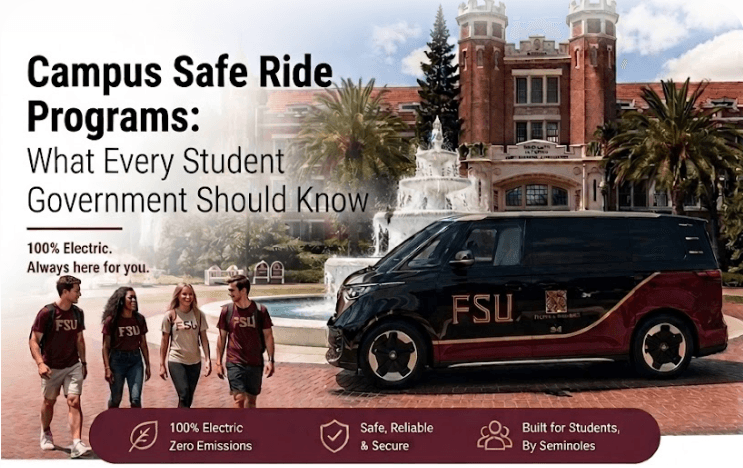
On-demand shuttle services, which are becoming increasingly common, let you request a ride through a mobile app. The vehicle comes to you, similar to a rideshare experience but free. These services are especially valuable during evening and late-night hours when fixed routes may not be running. If your university offers an on-demand shuttle program, download the app during orientation and take a test ride before you actually need it.
Many newer campus transit programs use electric vehicles, which are quiet, clean, and often easier to flag down on campus because they travel at lower speeds and can navigate pedestrian-heavy areas that large buses avoid.
Walking: Still the Primary Mode
Despite all the transportation options available, walking will likely be how you get to most classes. A few tips for making walking work well:
- Invest in good shoes. You will walk far more than you expect, especially during the first few weeks when you are still optimizing your routes.
- Use campus maps to find shortcuts. Many campuses have pedestrian paths through buildings, courtyards, and green spaces that are significantly shorter than following roads and sidewalks.
- Build in more time than you think you need. A 10-minute walk on a campus map can easily become 15 minutes when you factor in stairs, building entry, and the realization that your classroom is on the fourth floor of a building you entered from the wrong side.
- Download your university's campus map app if one exists. Most include building-level navigation and real-time event information that can help you avoid congested areas.
Biking and Scooters
A bicycle is one of the best investments a college student can make, particularly on larger campuses where walking between far-flung buildings eats into your schedule. Many universities have invested in bike infrastructure including dedicated lanes, covered parking, and repair stations.
Before bringing or buying a bike, check your campus bike policies. Common requirements include registration with campus police, use of a U-lock (cable locks are easily cut), and storage in designated racks only. Some residence halls have indoor bike storage, which protects against theft and weather.
Electric scooter and bike-share programs operate on many campuses, offering short-term rentals through mobile apps. These are convenient for occasional use but can add up quickly if used daily. If you find yourself renting a scooter every day, buying your own bike is almost certainly cheaper.
Late-Night Transportation and Safety
This is the area where many campuses have the most room for improvement, and where newer programs are making the biggest difference. Walking alone across a dark campus at midnight is a reality for many students, whether returning from the library, a late lab, a study group, or a social event.
Know your late-night options before you need them:
- Does your campus offer a nighttime shuttle or safe ride program? What are the hours, and how do you request a ride?
- Where are the emergency blue light phones located along your common walking routes?
- Does your university have a safety escort service where campus security or trained students will walk with you?
- Are there well-lit paths that avoid isolated areas, even if they add a few minutes to your walk?
Many universities have partnered with transit providers like Slidr to offer on-demand electric shuttle service specifically during late-night hours. These programs let students request a ride through an app and be picked up within minutes by a vetted, trained driver. If your campus has this service, use it. It exists because the university has determined that student safety during nighttime hours is a priority worth investing in.
Off-Campus Transportation
Getting beyond campus for groceries, medical appointments, internships, or social activities often requires more planning. Options to explore during your first week:
- Municipal bus or rail service: Many universities are located along public transit routes, and some offer free or discounted passes to students as part of tuition.
- University-organized shuttles to shopping centers, airports, or train stations, particularly around holiday breaks.
- Rideshare apps: Useful but expensive for regular use. Set a monthly budget and stick to it.
- Carpool boards: Check student Facebook groups, Discord servers, and bulletin boards for ride-sharing opportunities with other students heading to the same areas.
Making It All Work Together
The students who navigate campus most efficiently use multiple modes depending on the situation. They walk to nearby classes, bike to far-flung buildings, use the shuttle for late-night returns, and split rideshare costs with friends for off-campus excursions. The key is knowing all your options and choosing the right one for each trip rather than defaulting to a single mode for everything.
Spend time during orientation week exploring the campus physically. Walk different routes between your key destinations. Download every transportation app your university offers. Ask upperclassmen which shuttle routes are most useful. The investment of a few hours during your first week will pay dividends for the entire academic year.