The connection that makes transit work.
Electric shuttles connecting transit hubs to final destinations. Close the gap between where transit stops and where people actually need to go.
Why the last mile matters most
Connect commuter rail passengers to offices, hotels, and destinations in the city core. Reduce downtown traffic while extending the reach of existing rail.
Shuttle employees from remote parking lots to campus buildings or office parks. Reduce on-site parking demand without reducing headcount.
Connect airport terminals to nearby hotels and resorts. An on-demand connection that guests request from the app the moment they land.
Extend the reach of bus rapid transit and regional bus networks into lower-density residential areas that fixed routes cannot serve efficiently.
Move fans from remote parking, transit stops, and drop-off zones to stadium gates on game day. High-volume, time-sensitive, fixed route at peak, on-demand for stragglers.
We handle everything
Turnkey from day one
Slidr designs the connection route, procures vehicles, staffs drivers, and manages daily operations. One contract covers vehicles, staff, technology, insurance, and reporting. No internal transit staff required.
Sized for the corridor
High-volume connections at peak commute hours need larger vehicles. Off-peak on-demand service works with smaller, nimbler EVs. Slidr right-sizes the fleet for each connection and adjusts seasonally.
Drivers who run on time
First and last mile connections live and die by punctuality. Every Slidr driver is background-checked, trained on the route, and held to on-time standards tracked in the dashboard.
Custom technology. Your brand.
Know when the shuttle arrives.
Commuters track the shuttle in real time and see estimated arrival at their stop or pickup point. For on-demand connections, riders request a ride from the transit hub and track the vehicle as it approaches.
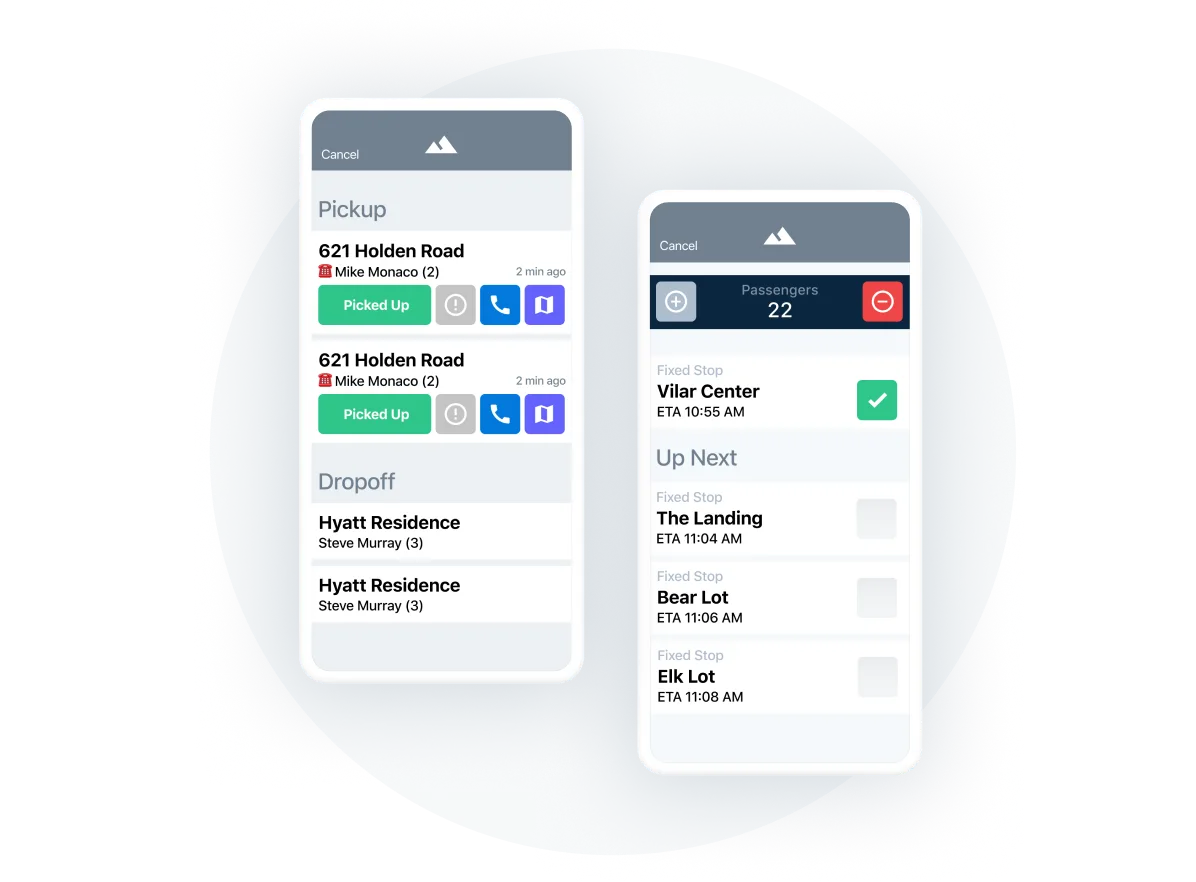
Route clarity on every run
Drivers follow their assigned stop sequence or pickup queue with turn-by-turn guidance. Passenger counts, schedule adherence, and deviations are logged automatically on every trip.
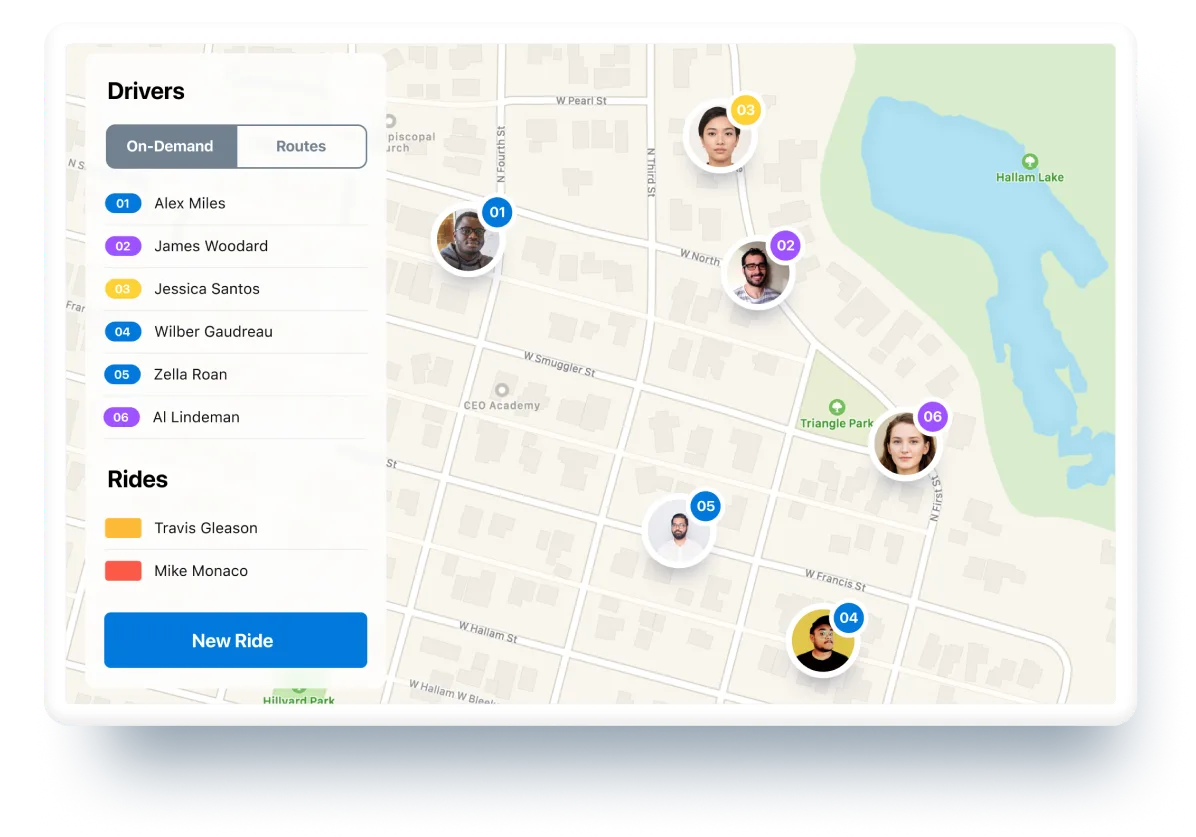
Real-time connection monitoring
Monitor active vehicles, track on-time performance, and view ridership across all connection points in real time. Adjust dispatch in response to train delays, bus schedule changes, or demand spikes.
Reporting and oversight tools
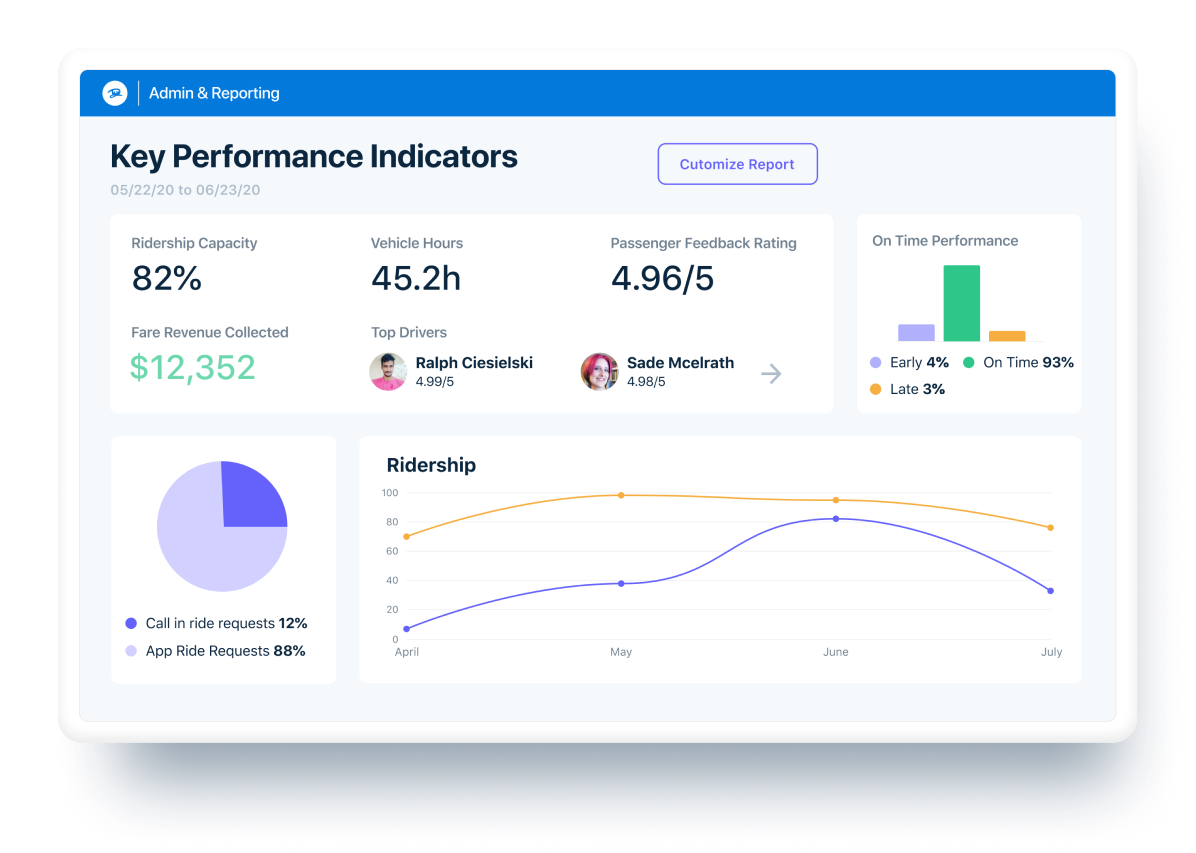
Reporting Tools
Ridership by connection point, time of day, and direction. Measure the impact of your shuttle connection on transit ridership and parking demand. Exportable for agency reports and grant documentation.
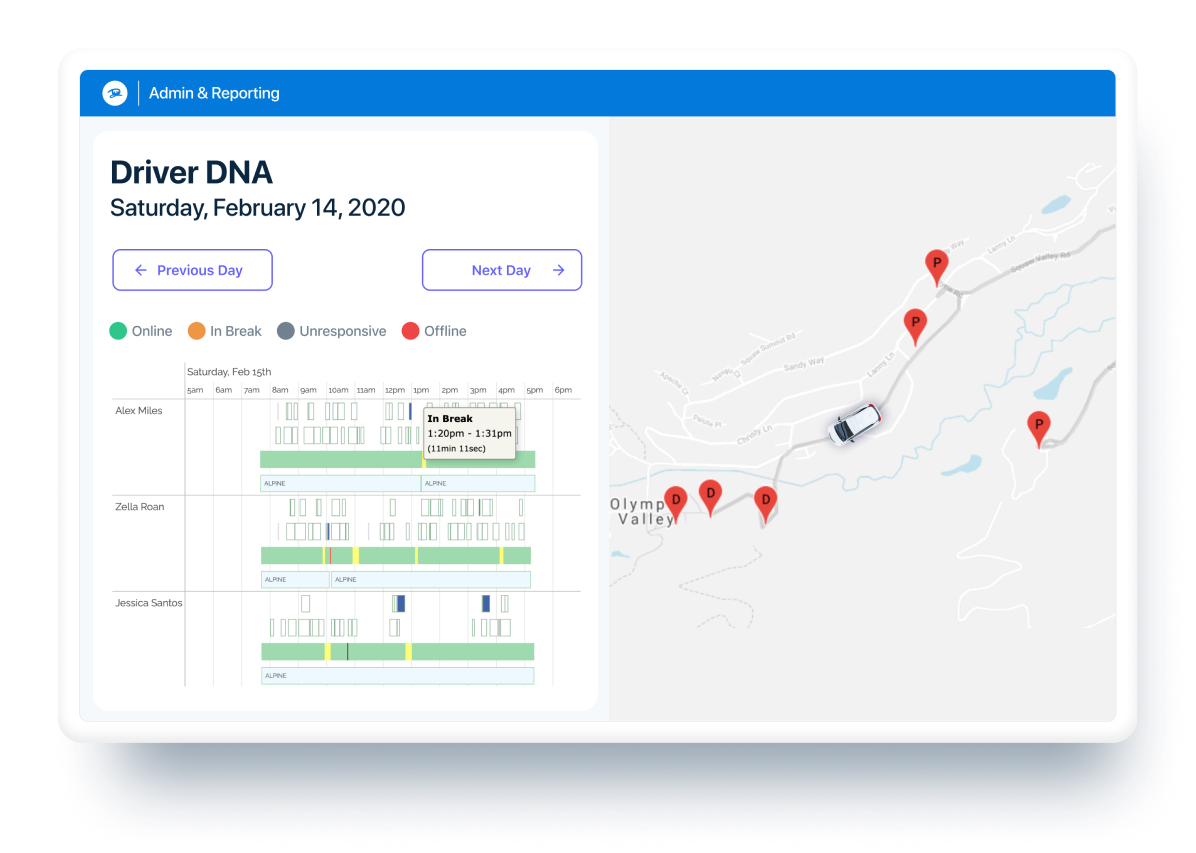
Management Tools
Color-coded shift overview tracks on-time performance across all connection runs. Adjust dispatch in real time when transit schedules shift. Playback any trip for accountability and service review.
Up and running in 30 to 60 days
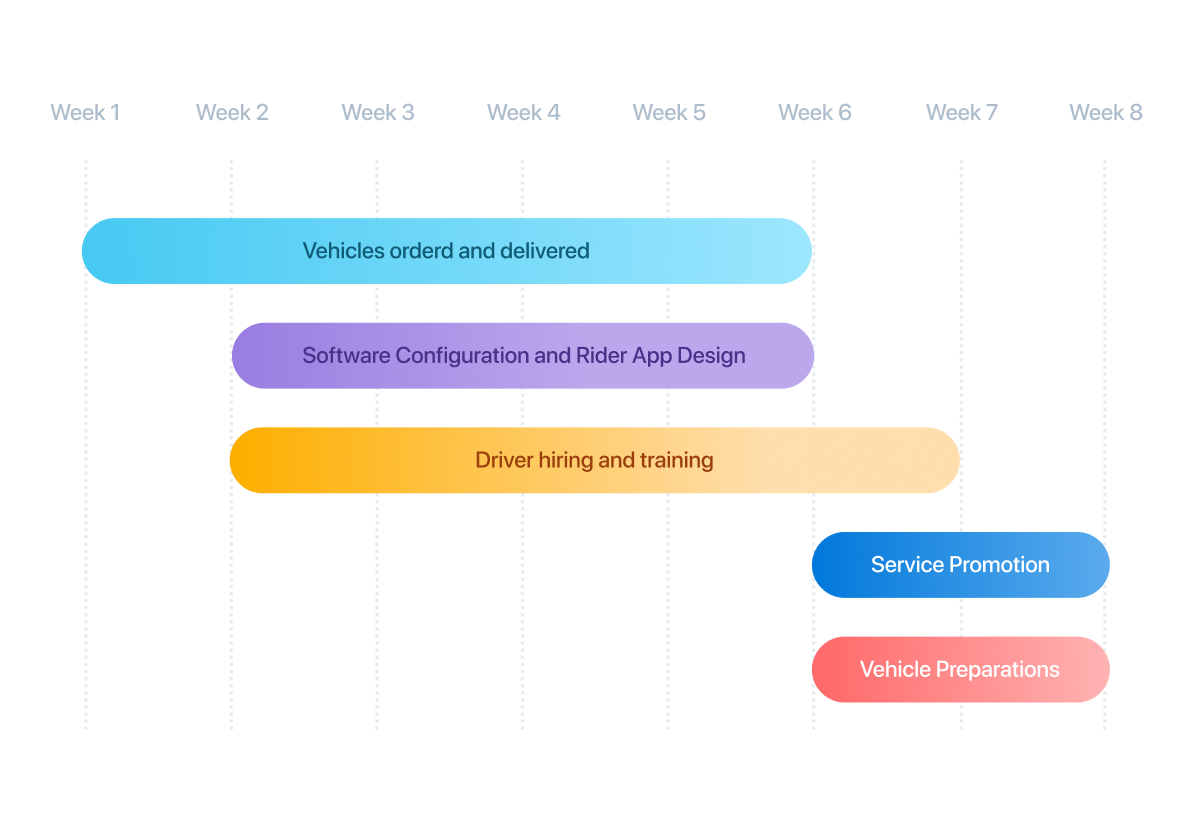
Slidr handles route design, vehicle procurement, app configuration, and driver training. Most first/last mile connections launch within days of contract signing.
Closing the gap in the real world
Tradition
Electric shuttle program connecting residents across the Tradition master-planned community to shopping, dining, and community destinations, closing the gap between homes and the places residents go daily.
CatawbaGO
Campus and community shuttle connecting students to campus facilities and downtown Salisbury. Closes the gap between campus and the city, a direct first/last mile connection for students without cars.
First & last mile FAQ
What is first and last mile transit?
First and last mile refers to the portion of a trip between a transit hub, train station, bus terminal, park-and-ride lot, and the final destination. It is the gap that most transit systems fail to close, causing riders to drive the whole way instead. A first/last mile shuttle bridges that gap with a short, reliable electric shuttle connection.
How does Slidr solve the first and last mile problem?
Slidr operates electric shuttle connections between transit hubs and final destinations. Service can run as a fixed route on a published schedule, on-demand when riders request a pickup, or as a hybrid of both depending on the time of day and demand level. Riders track the shuttle in real time through the app.
Can the shuttle run on-demand instead of a fixed schedule?
Yes. Many first/last mile programs run fixed routes during peak commute windows and switch to on-demand dispatch during off-peak hours. This keeps service available without running empty vehicles on a fixed loop. The same platform and rider app handles both modes.
What vehicles are used for first and last mile connections?
Slidr uses low-speed electric vehicles and larger electric shuttles depending on the volume and distance of the connection. Vehicle selection is part of the service design process and can be adjusted as ridership grows.